

| IN A NUTSHELL |
|
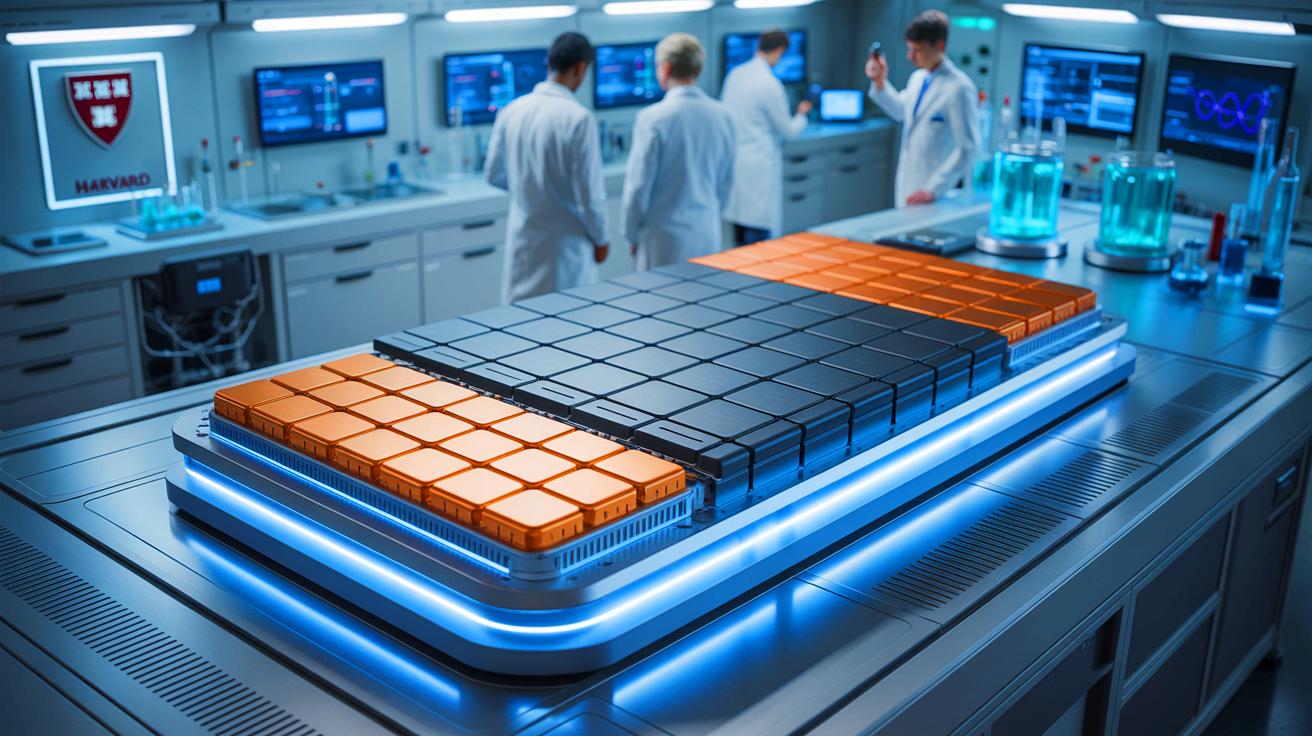
Recent innovations at the Harvard John A. Paulson School of Engineering and Applied Sciences have unveiled a promising breakthrough in electric vehicle battery technology. This revolutionary advancement introduces a solid-state battery that can recharge in a mere ten minutes, dramatically enhancing the efficiency and practicality of electric vehicles. This development not only promises quicker charging but also boasts a surprisingly long lifespan, making it an exciting prospect for the future of sustainable transportation.
A Promising Leap in Electric Vehicle Autonomy
The team at Harvard has achieved a significant milestone in battery technology by integrating a solid-state battery capable of quick charging. This innovation marks a substantial improvement in the autonomy of electric vehicles, addressing one of the primary concerns of potential EV owners: charging time. By reducing the recharge duration to just ten minutes, these batteries could transform how we perceive and use electric vehicles.
Moreover, this advancement goes beyond just speed. The battery’s solid-state nature ensures enhanced durability and safety, mitigating the risks associated with traditional liquid electrolytes. This technology represents a significant leap forward for electric vehicles, potentially leading to wider adoption and acceptance in the mainstream market. With such progress, the future of transportation looks increasingly electric and efficient.
“We Caught Quarks in a Forbidden Embrace”: World’s Largest Atom Smasher Exposes Hidden Top Quark Pairings, Shocking Physicists and Redefining Particle Science
Unprecedented Durability and Charging Speed
At the heart of this technological leap lies a battery that not only charges rapidly but also exhibits exceptional durability. This solid-state battery maintains 80% of its charge even after 6,000 cycles. To put this into perspective, a vehicle equipped with a 60 kWh battery utilizing this technology could travel nearly 1.9 million miles before its capacity diminishes to 48 kWh.
This remarkable durability ensures that vehicles remain functional and efficient over extended periods, significantly reducing the frequency and cost of battery replacements. Such endurance, coupled with the ability to recharge fully in just ten minutes, sets a new standard in the electric vehicle industry. These attributes make the technology a potential game-changer, paving the way for more sustainable and cost-effective transportation solutions.
“These Scientists Just Broke the Unbreakable”: US Researchers Smash a 165-Year-Old Physics Law, Unlocking Astonishing New Pathways for Energy Breakthroughs
The Chemistry Behind Rapid Charging
A significant aspect of this breakthrough is the novel approach taken to combat dendrites, which are metallic projections that can form on battery anodes and compromise performance. Zhao and his team at Harvard have devised a method involving a silicone coating that allows lithium ions to deposit evenly, preventing dendrite formation. This process can be visualized as lithium ions wrapping around a silicone particle, akin to chocolate coating a hazelnut.
By addressing this fundamental issue, the technology not only enhances battery longevity but also ensures consistent performance. This innovation highlights the importance of chemistry in advancing battery technology, providing insights into how we can overcome existing limitations and push the boundaries of what’s possible in energy storage.
Puzzle World Shaken as Physicists Unveil Quantum Rubik’s Cube and Reveal the Most Efficient Solution Ever Achieved in Scientific History
The Road to Commercialization
Despite the promising results in laboratory settings, the current prototype is no larger than a postage stamp. However, Adden Energy, a Harvard-affiliated startup, is working diligently to scale up the technology to a more practical size, comparable to that of a smartphone. This step is crucial for transitioning from prototype to commercial application, with potential uses in electric vehicles and beyond.
As major automotive manufacturers such as BMW, Toyota, and Nissan gear up for the introduction of solid-state batteries, the timeline for commercial rollout is anticipated between 2025 and 2030. Additionally, tech giants like Microsoft are exploring innovative materials to optimize this technology further. This widespread interest underscores the significant potential and transformative impact that solid-state batteries could have on the electric vehicle industry.
As the world watches these developments unfold, the potential impact of solid-state battery technology on electric vehicles is becoming increasingly apparent. With rapid charging capabilities and enhanced durability, this innovation could redefine transportation. Yet, as we look towards a future powered by such advanced technology, one question lingers: How will this breakthrough influence the broader adoption of electric vehicles and the energy landscape as a whole?
This article is based on verified sources and supported by editorial technologies.
Did you like it? 4.5/5 (25)
link