
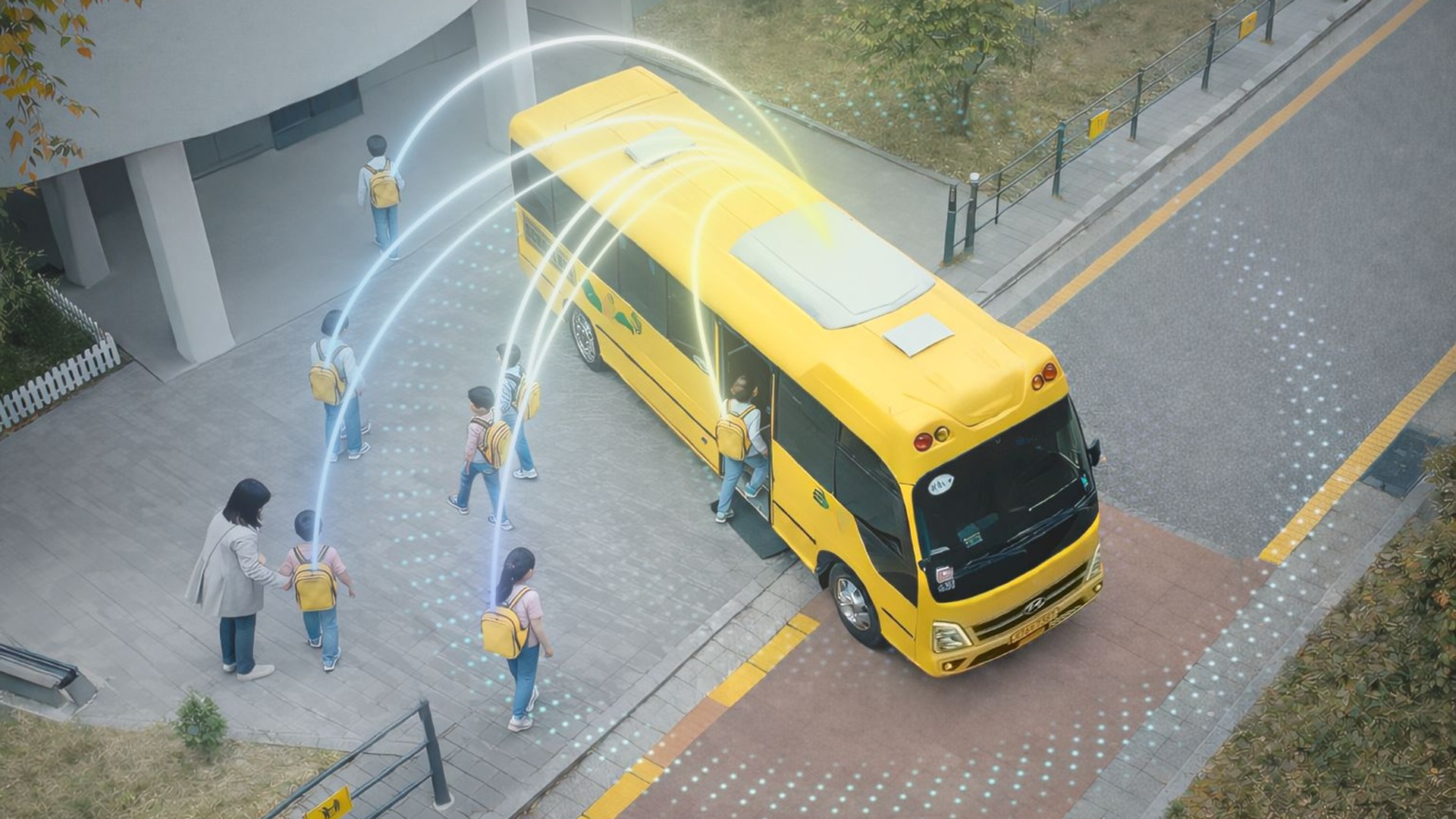
South Korea’s automotive giants Hyundai Motor Company and Kia Corporation have recently launched a new driver-safety technology that uses radar to detect people and vehicles even through blind spots.
The system, called Vision Pulse, is capable of detecting people and vehicles even when they’re hidden from view. It utilizes ultra-wideband (UWB) radio signals to pinpoint the position of nearby objects in real time.
This UWB-based approach delivers positional accuracy of up to four inches (10 centimeters) within a 330-foot (100-meter range), maintaining performance even in visually obstructed environments.
“The technology maintains over 99 percent detection accuracy under adverse weather or nighttime conditions and offers rapid communication speeds of one-five milliseconds, ensuring effective real-time safety management,” Hyundai officials said.
Beyond line of sight
While conventional blind-spot or proximity systems rely heavily on cameras, radar or fixed infrastructure, Vision Pulse connects directly with UWB-enabled devices in the surroundings. It employs UWB modules installed in vehicles to emit signals.
If nearby vehicles, bicycles or pedestrians are also equipped with UWB modules, such as those found in certain smartphones, wearables аnd trackers, the system determines their precise location by measuring how long the signals take to travel between modules.
“When a potential collision is detected, the system issues alerts, reducing the likelihood of an accident and greatly enhancing safety,” Hyundai representatives, added.
According to the companies, Vision Pulse can achieve positioning accuracy of up to four inches (10 centimeters) within a 330-foot (100-meter) radius even at night, in bad weather, or at crowded intersections where visual sensors struggle.
The system maintains more than 99 percent detection accuracy and offers rapid communication speeds of between one and five milliseconds. This enables fast, simultaneous tracking of multiple high-speed moving objects.
“Hyundai Motor and Kia also enhanced the practicality of the technology by developing and applying algorithms capable of accurately predicting the positions of multiple objects, even when they are moving at high speeds around the vehicle,” Hyundai official added.
Detecting the unseen
Cost and scalability are two additional advantages of the system. Certain Hyundai and Kia cars already include UWB hardware through Digital Key 2, a smartphone-based car key that allows you to unlock, lock, and start your car with your phone.
As a result, the system can be enabled without additional sensors. “Furthermore, it reduces reliance on expensive sensors such as LiDAR and radar,” the company explained in a press release.
UWB’s operation in the gigahertz range also minimizes interference from other wireless signals and provides strong penetration and diffraction capabilities.
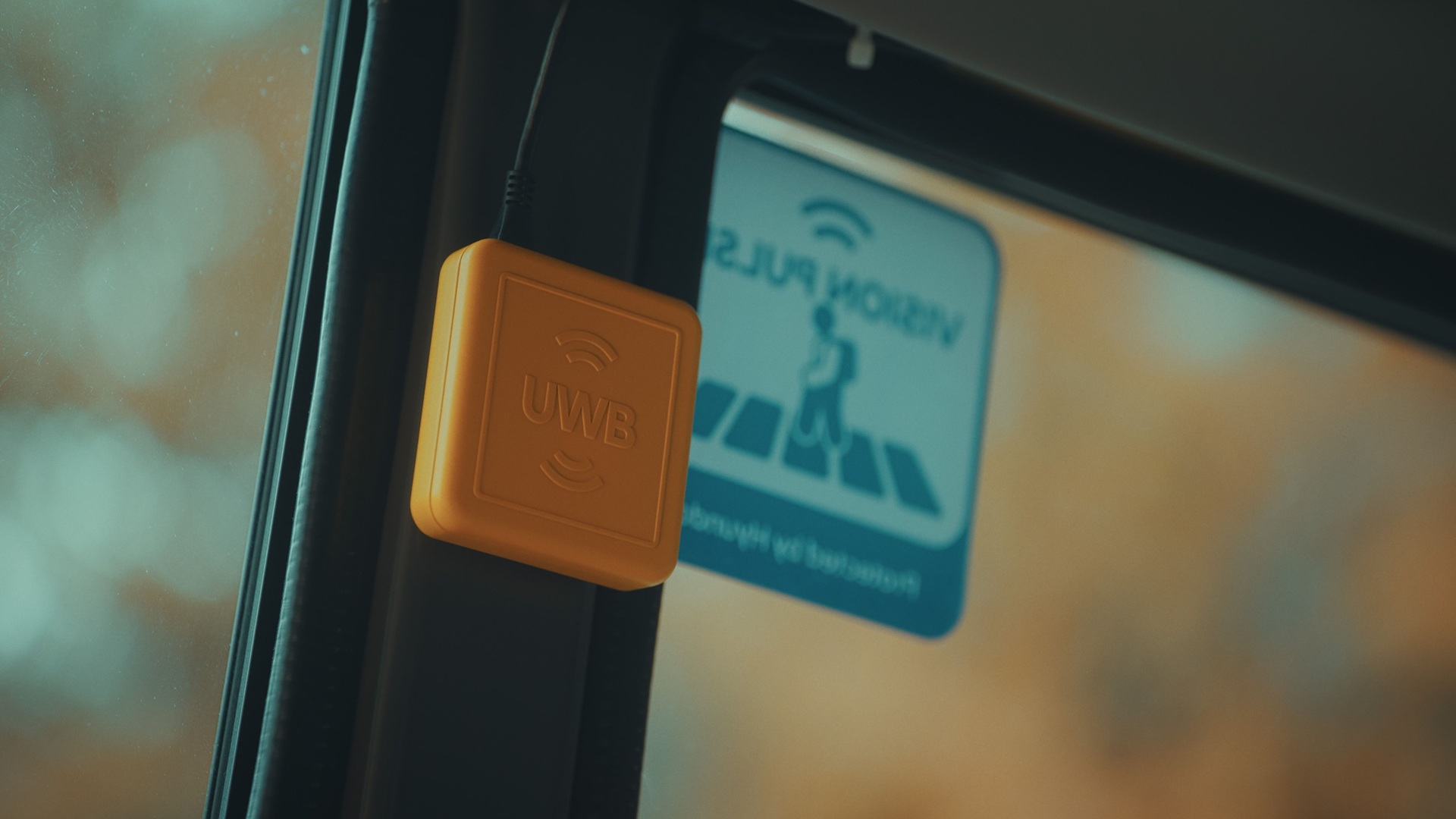
Credit: Hyundai Motor Company / Kia Corporation
Both Hyundai and Kia expect Vision Pulse to be used beyond driver assistance. In industrial mobility settings, the tech could help prevent collisions in environments such as warehouses by adapting to industrial operating conditions and reducing workplace accidents.
Meanwhile, in disaster response scenarios, it could be used to locate individuals trapped or buried under debris during emergencies. The companies have already begun testing the technology in live environments.
Trials have been underway at Kia’s PBV Conversion Center in Hwaseong, South Korea, since 2025. The tests focus on preventing collisions between forklifts and workers. Additional pilot programs are planned with the Busan Port Authority to evaluate safety improvements across large-scale industrial mobility operations.
link