

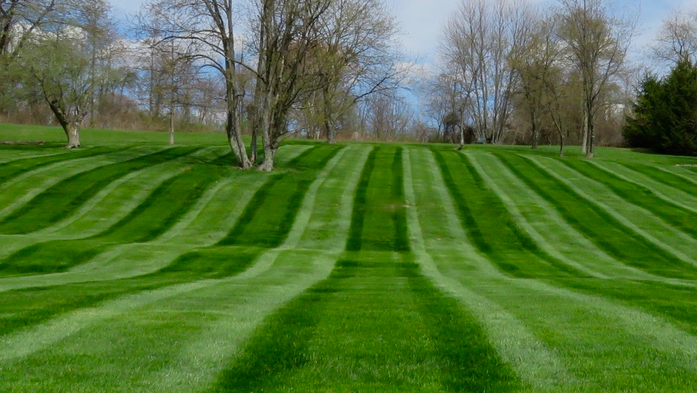
One of the simplest ways to improve the health and appearance of a lawn is also one of the easiest to ignore: avoid cutting off too much grass at once. It sounds obvious, yet a great many lawns are regularly allowed to grow long and are then cut back very short in a single session. The result may look tidy for a day or two, but the grass can be left stressed, pale and slower to recover. This is where the so-called one-third rule comes in.
The principle is straightforward. When mowing, try not to remove more than roughly one third of the total height of the grass in a single cut. If the lawn has grown to around 9cm, for example, bringing it straight down to 3cm would be an aggressive cut because two thirds of the leaf has been removed. Reducing it to around 6cm would be much gentler, allowing the grass to keep enough leaf area to continue functioning normally.
The rule is not meant to be treated like an exact scientific measurement every time the mower comes out. Nobody needs to walk around the garden with a ruler before every cut. It is better thought of as a practical guideline that encourages gradual trimming rather than severe cutting. In normal conditions, the grass will usually respond much better when only a modest amount is removed each time.
There is a good reason for this. Grass leaves are responsible for photosynthesis, which is how the plant produces the energy it needs to grow and maintain healthy roots. When too much leaf is suddenly removed, the plant has less surface area available to capture sunlight. The grass then has to divert energy towards replacing the lost growth, and this can temporarily weaken the root system.
That matters because the roots are what support the lawn through dry spells, foot traffic and other stresses. A lawn that is repeatedly cut too short can develop shallow roots and become more dependent on frequent watering. It may also become thinner over time, creating more opportunities for weeds and moss to establish themselves.
The one-third rule is particularly useful in spring, when grass can grow surprisingly quickly. Mild temperatures and regular rainfall can cause the lawn to put on several centimetres of growth in a matter of days. If mowing is delayed because of poor weather, it can be tempting to lower the mower dramatically once conditions improve and try to restore the lawn to its usual height immediately.
A better approach is to cut it in stages. Start at a higher setting, wait a few days if possible and then reduce the height again. This may mean mowing twice within a week, but it is usually much kinder to the grass than one severe cut. It also tends to produce a cleaner finish, because long grass can overwhelm the mower and leave heavy clumps of cuttings behind.
The same principle becomes useful after a holiday. Returning home to an overgrown lawn often creates an urge to tidy everything in one go, but this is exactly when restraint can help. Long grass may already be slightly weaker lower down because the upper leaves have shaded the base. Removing most of the growth at once can expose pale stems and leave the lawn looking yellow or brown.
Cutting gradually allows more light to reach the lower parts without shocking the plants. It also gives the mower an easier job. Long, damp grass can clog the deck, block collection systems and reduce cut quality, so raising the cutting height for the first pass often improves both the health of the lawn and the performance of the machine.
There is also a seasonal element to consider. During periods of hot, dry weather, sticking to the one-third rule becomes especially important because the lawn is already under stress. Grass loses moisture more quickly when it is cut very short, and the exposed soil heats up faster in direct sunlight. Leaving the lawn slightly longer can help shade the soil and reduce evaporation.
This is why summer cutting heights are often better kept a little higher than spring cutting heights. A lawn that is usually maintained quite short may benefit from being allowed to grow longer during prolonged dry weather. The one-third rule then helps prevent the temptation to take it back down too aggressively once mowing resumes.
The mower itself has a role to play as well. A sharp blade produces a cleaner cut, while a dull blade tends to tear the grass. When the lawn is being reduced gradually, a clean cutting edge helps the plant recover quickly. If the grass is already being stressed by removing too much at once, adding a ragged cut on top of that only makes matters worse.
For homeowners looking to maintain a mower properly or select equipment suited to the size and condition of their lawn, suppliers such as Garden Machinery Direct can be useful when comparing mowing options, replacement parts and different cutting systems. Whatever machine is used, however, the mowing technique still matters. Even an excellent mower cannot compensate fully for grass that is being cut too severely every time.
Another benefit of the one-third rule is that it encourages more regular mowing without requiring the lawn to be cut extremely short. Frequent light mowing can help promote thicker growth because the grass is encouraged to produce more shoots rather than simply growing taller. Over time, this can result in a denser lawn that looks more even and is better able to compete with weeds.
There is often confusion between mowing frequently and mowing low. They are not the same thing. A lawn can be cut often while still being kept at a sensible height. In fact, this is usually preferable to allowing it to grow long and then cutting it harshly. The aim is consistency rather than severity.
The amount of grass removed can also affect how clippings behave. When only a small amount is cut, fine clippings are easier for the mower to collect or mulch. If a huge volume is removed in one pass, the mower may struggle to process it cleanly. This can lead to clumps being deposited on the surface, which may smother the grass underneath if they are left in place.
Those using a mulching mower benefit particularly from regular, light cuts because the system works best when clippings are small enough to be chopped finely and returned to the lawn. Large amounts of long grass are much harder to break down evenly. Keeping within the one-third principle therefore supports both lawn health and more effective mulching.
There are, of course, times when the rule cannot be followed perfectly. Weather can interrupt mowing schedules, work can get in the way and sometimes grass simply grows faster than expected. The important thing is what happens next. If the lawn has become much longer than usual, it is better to adjust the cutting height upwards rather than insisting on taking it immediately back to the preferred level.
The same applies in autumn. Grass can continue growing strongly during mild, damp conditions, even when the traditional mowing season feels as though it should be coming to an end. Cutting a little and often while growth continues is generally safer than leaving the lawn untouched for weeks and then carrying out one very heavy cut before winter.
It is also worth remembering that different areas of the garden may need slightly different treatment. Shaded grass may grow more slowly, while sunnier or better-fed areas can put on more growth. There is no requirement for every square metre to be treated identically if the conditions are clearly different.
The best guide is often the appearance of the grass itself. If the mower is constantly producing huge amounts of clippings, the lawn is probably being left too long between cuts. If the grass looks pale or scalped after mowing, the cutting height may be too low. A healthy lawn should generally look green and even after mowing rather than as though it has been stripped back.
The one-third rule works because it encourages moderation. It discourages drastic cutting, helps protect the root system and makes it easier for the lawn to recover after each mowing session. It also encourages a more flexible approach, where cutting height and frequency change according to growth rather than being fixed throughout the year.
A good lawn does not need to be kept obsessively short to look tidy. In many cases, slightly longer grass is healthier, more resilient and easier to maintain. By removing a modest amount each time and allowing the lawn to adjust gradually, homeowners can achieve a more consistent finish with less stress on both the grass and the mower.
Ultimately, the one-third rule is less about precise measurements and more about avoiding extremes. Grass is a living plant, and it responds better to regular, gentle maintenance than to being repeatedly allowed to grow long and then cut back dramatically. Keeping that simple principle in mind can make a surprisingly large difference to the colour, density and overall condition of the lawn.