

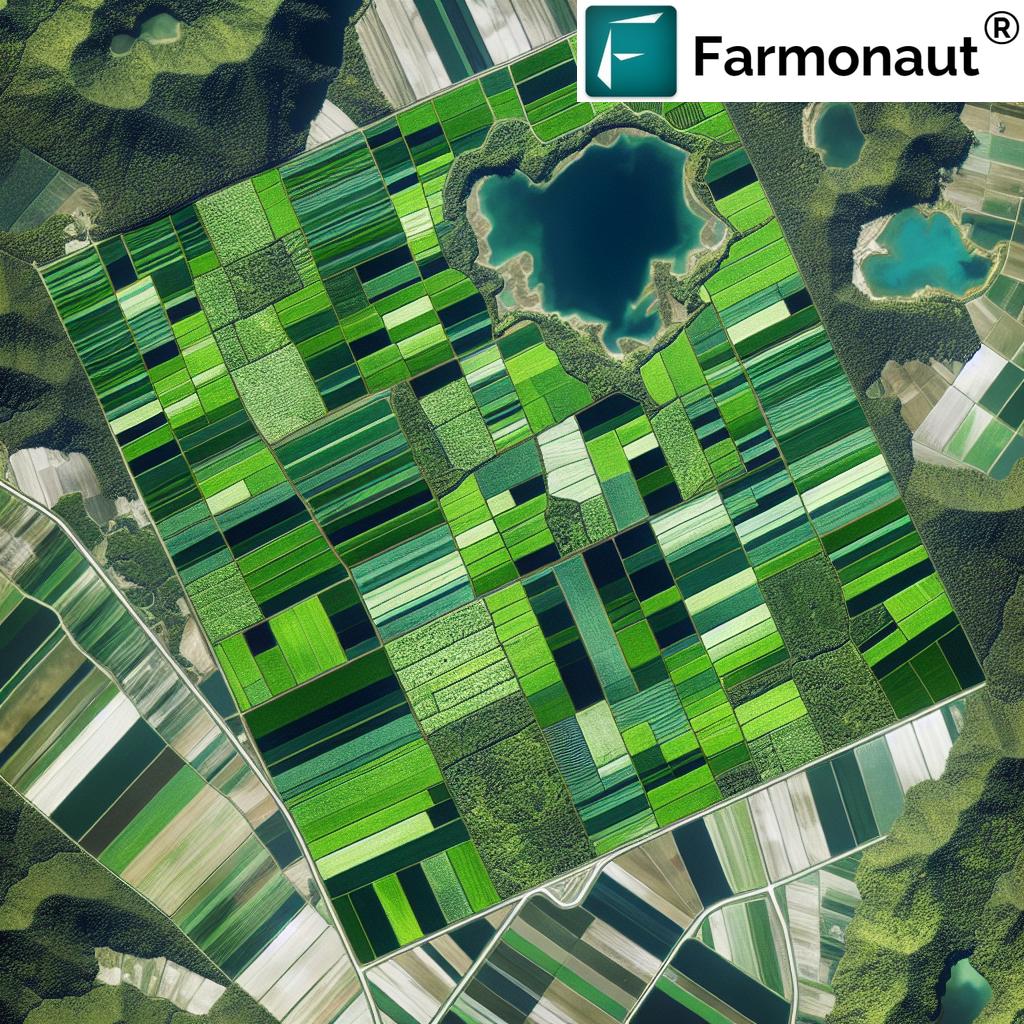
“By 2025, precision agriculture is projected to increase global crop yields by up to 15% using advanced data analytics.”
Introduction: The Age of High Technology Farming
The agricultural sector now stands at the forefront of a technological revolution, ushering in an era where high technology farming and new farming technology redefine how we grow, manage, and supply food. The fusion of precision agriculture, drone technology in farming, and indoor farming technology is drastically transforming the efficiency, sustainability, and productivity of the industry. As the world faces the dual challenges of global food security and changing climate conditions, these innovations are not only enhancing yields but also minimizing environmental impact—setting the standard for 2026 and beyond.
Let’s embark on a comprehensive exploration of the latest farming technology trends, breakthroughs, and the integrated systems poised to dominate the future of agriculture.
High technology farming depends on the integration of advanced systems—ranging from IoT-driven soil sensors and autonomous vehicles to drone surveillance and AI analytics. Each innovation contributes to smarter, more sustainable, and technology-powered agricultural practices that meet the rising demands of 2025 and beyond.
The Revolution in Modern Agriculture
Global agriculture is undergoing an unprecedented transformation. By leveraging innovations such as indoor farming technology, precision agriculture, and drone technology in farming, traditional practices are being redefined for optimal efficiency, resource management, and climate resilience. The transition to farming using technology represents a significant break from conventional approaches, ensuring our food systems remain stable amidst escalating population pressures and uncertain environmental conditions.
Key Insight:
The widespread adoption of advanced agricultural technologies is projected to decrease input waste by up to 30% while increasing operational efficiency across vast farmlands.
Five Essential Benefits of High Technology Farming
- ✔ Precision management of nutrients, water, and pesticides—minimizing cost and environmental impact.
- 📊 Data-driven decisions for crop rotation and input scheduling—boosting yield and profitability.
- ⚡ Timely detection of pest infestations and soil health issues—reducing losses.
- 🛰 Remote monitoring for resource and field management—enabling scalable operations.
- ♻ Enhanced sustainability—resource savings and smaller carbon footprints.
Precision Agriculture: Data-Driven Farming Using Technology
The term precision agriculture epitomizes the use of advanced technologies—including satellite imaging, sensors, IoT (Internet of Things) devices, and data analytics—to continuously monitor and optimize every aspect of the farming process.
The result? Improved crop health, higher yields, and significant savings in water, fertilizer, and energy.
- 🛰 Remote Sensing: Multispectral imagery to track crop vigor and stress levels
- 📡 IoT Sensors: Embedded in fields to monitor soil moisture, temperature, and nutrient content
- 🖥 Data Analytics Platforms: Aggregating field data for actionable, site-specific recommendations
- 💧 Variable Rate Irrigation: Targeted watering minimizes waste and maximizes growth
- 🚜 Autonomous Machinery: Precision equipment for planting, fertilization, and harvesting
In 2025 and beyond, precision agriculture enhances sustainability, scales to global challenges, and aligns with environmental and resource use targets.
Pro Tip:
Integrating satellite imagery and field sensors allows farmers to spot irrigation issues or nutrient imbalances before visible crop damage occurs, enabling preemptive action and optimal yields.
Our Agro Admin App provides scalable monitoring and detailed field insights, empowering decision-makers to implement precision agriculture at any operational scale using real-time satellite and IoT data.
- 🌍 Geospatial analytics for uniformity mapping
- 🧠 AI-based advisories to guide crop and irrigation management
- ⏳ Time trackable data on crop stress and soil condition
- 🔗 Easy API integration for enterprise-scale adoption (Farmonaut API)
- 💡 Informed, profit-maximizing choices from actionable data
Drone Technology in Farming: The Power of Aerial Intelligence
Among the most significant breakthroughs in modern agriculture is the widespread adoption of drone technology. These agile devices, equipped with multispectral sensors and AI-driven analytics, have revolutionized how farmers monitor their crops, fields, and farmlands.
How Drones Work in the Field
- 🕵️ Aerial Surveillance: High-resolution mapping, detecting variations in crop health, moisture, and growth patterns
- 💧 Precise Application: Targeted spraying of water, fertilizers, and pesticides to reduce waste and environmental contamination
- ⚡ Rapid Data Collection: Large areas monitored in minutes, delivering informed, real-time decision making
- 🔬 Pest and Infestation Detection: Immediate identification and intervention before infestations spread
Drones are especially effective for large-scale farms and complex production environments in 2025, cutting costs, reducing input waste, and supporting sustainable management.
- 🚁 Immediate alerts for pest or disease outbreaks
- 🌱 Detect nutrient deficiencies via multispectral imaging
- 📈 Monitor plant growth rates over time
- 🌾 Assess soil condition without physical sampling
Common Mistake:
Avoid overlooking regular drone calibration and sensor maintenance. Outdated firmware or dirty optics can lead to inaccurate analytics, risking incorrect fertilizer or pesticide application.
Additionally, drones are integral to data acquisition for blockchain-based product traceability, maintaining transparency and accountability within agricultural supply chains.
Our fleet management solutions help optimize vehicle and drone deployment, saving costs and improving operational efficiency in high-tech farm management.
“Over 38% of new indoor farms in 2025 will use automated climate control systems to boost sustainability and efficiency.”
Indoor Farming Technology: The Rise of Vertical & Controlled-Environment Farms
Indoor farming technology is rapidly gaining traction as a solution to shrinkage of arable land, urbanization, and the unpredictability of climate change. Prominent forms—such as vertical farming and Controlled-Environment Agriculture (CEA)—use environmental control systems to create optimal biodiversity and growing conditions year-round.
Key Advantages of Indoor & Vertical Farming
- Utilize LED lighting, hydroponics, and aeroponics to control every stage of crop growth
- Reduce water usage by up to 90% compared to traditional field farming
- Minimize pesticide and fertilizer use—closed systems drastically reduce runoff and contamination
- Enable crop production in urban centers, shortening supply chains and lowering food miles/carbon footprints
- Grow year-round, regardless of external climate or weather instability
These modular, scalable systems are ideally suited for feeding growing urban populations and reducing pressure on traditional rural agriculture.
As environmental responsibility and carbon footprint monitoring become critical, indoor farming delivers on both productivity and sustainability targets.
Investor Note:
Indoor vertical farms and advanced CEA systems are drawing significant investment due to their scalability, lower environmental risk, and ability to deliver premium produce in urban markets.
Comparison of Advanced Farming Technologies and Their Estimated Impact in 2025
IoT and Sensor Networks: Real-Time Data for Smart Decisions
The Internet of Things (IoT) is the invisible backbone of farming using technology. Fields lined with tiny, durable sensors supply a constant stream of real-time data on soil moisture, nutrient concentrations, temperature, and even plant health. This data-driven approach enables farmers and agri-businesses to make precision decisions, reducing waste and maximizing operational efficiency.
Major IoT Applications in Modern Farming
- 🌿 Automated irrigation systems adjust water delivery per zone, based on live field feedback
- 🌱 Soil health tracking—pH, salinity, and organic content measured hourly for accurate input management
- 📊 Big data analytics predict optimal sowing, fertilization, and harvesting windows based on historical and real-time data
- ⏲ Operational alerts prevent resource loss by flagging equipment or climate anomalies early
With our Farmonaut satellite monitoring and IoT integration, stakeholders access environmental impact data, enabling improved carbon reporting and sustainability compliance.
Explore our fleet management platform for intelligent machinery and operational oversight, reducing downtime and unnecessary expenses.
Automation and AI: Enhancing Operational Efficiency in High Technology Farming
Artificial Intelligence (AI) and autonomous systems are redefining farming operations. Machine learning platforms digest enormous datasets—from satellite images and weather sensors to market trends—delivering real-time forecasts and actionable plans. Self-driving tractors, AI-guided robotic harvesters, and auto-scheduling software are the cornerstones of the latest farming technology ecosystem.
- 🤖 Autonomous tractors plant and harvest with millimeter precision
- ⏳ Real-time yield prediction & adaptive harvest schedules
- 💹 Market analytics—AI suggests optimal sale timing and distribution
- 🦾 Robotic weeding and pest management lower chemical use and labor costs
- 🌧 Weather prediction models optimize irrigation and input plans
Our AI-based verification for crop loans and insurance delivers satellite-verified data for risk reduction—streamlining the financial side of smart, technologically advanced farming.
Satellite Monitoring and AI Advisory: Farmonaut’s Contribution to New Farming Technology
The synergy of satellite remote sensing, blockchain traceability, and AI-powered advisory systems is at the heart of the latest farming technology. At Farmonaut, we leverage multispectral satellite images to monitor agricultural health, soil conditions, and environmental impact—helping users make better decisions for growth, efficiency, and sustainability.
- 🛰 Satellite-based crop & soil monitoring for accurate, timely field diagnostics
- 🤖 JEEVN AI Advisory System—AI-driven advice for input scheduling, disease risk, and weather adaptation
- 🔗 Blockchain traceability—secure, real-time documentation of product journey (see product traceability)
- 🌀 Environmental impact reporting & carbon monitoring lend support for certification & compliance (see carbon footprinting)
- 📲 Multi-platform access via App, API (developer docs), and browser
Our modular subscription platform empowers everyone—from individual growers to large agribusinesses and government agencies—by making advanced, satellite-driven insights affordable and accessible.
Biotechnology & Crop Improvement in High Technology Farming
Modern biotechnology complements high technology farming by developing seeds and plant varieties resilient to pests, diseases, and extreme weather. Genetic techniques are now enabling precision trait selection and cross-breeding, boosting both yield and quality in varied environments. When paired with indoor farming technology, these advances support sustainable, high-output food production systems.
- 🧬 Disease-resistant varieties—reducing reliance on chemical inputs
- 🌡 Heat/drought tolerant crops—mitigating weather risks
- 🍅 Nutrition-focused breeding—improving vitamin and mineral content
- 🔬 Sensor-linked gene editing—accelerating on-farm genetic response to environmental stress
These advancements support supply resilience and global market adaptation for the agriculture sector.
Market Outlook:
Precision-bred and biofortified crops are expected to account for over 40% of global seed sales in 2026, as farmers seek robust solutions to evolving climate and pest challenges.
Risks, Insights, and Investor Notes for High Technology Farming
- ⚠ Risk: High initial capex for indoor and automated tech may limit access for smallholders
- 🔐 Data privacy: Proper governance of on-farm and operational data is crucial
- 🧑🏫 Continuous upskilling of growers and farm managers is required as technology evolves rapidly
- 🌎 Regulatory frameworks lag innovation—policy support is vital for safe, fair adoption
- 🕒 Scalability: Ensuring interoperability between new tech and legacy systems is an ongoing challenge
Pro Tip:
Combine satellite insights and on-ground sensors for enhanced accuracy—leveraging both broad and local data for the most robust precision agriculture strategy.
Frequently Asked Questions
1. What is high technology farming?
High technology farming refers to the use of advanced technologies such as precision agriculture, satellite imagery, indoor farming systems, drones, IoT sensors, AI analytics, and automation to improve efficiency, enhance crop yields, and achieve environmental sustainability in agriculture.
2. How do drones benefit agriculture in 2026?
Drones, equipped with multispectral sensors and AI analytics, monitor crop health, assess soil conditions, detect pests, and enable precise application of water and fertilizers. This technology leads to increased yields, reduced waste, and quick, informed management decisions over vast farmlands.
3. What is the main advantage of indoor farming technology?
Indoor farming technology controls all environmental conditions, enabling year-round, high-density crop production with drastically reduced water use and minimal pesticide application. It is ideal for urban centers, helping to lower supply chain emissions and deliver fresher produce.
4. How does Farmonaut contribute to high technology farming?
We provide affordable, satellite-driven monitoring, AI-powered advisory, blockchain-based traceability solutions, and environmental impact reporting through our platform, empowering users to achieve scalable, data-driven, and sustainable farming outcomes.
5. What are the risks or challenges in adopting high-tech agriculture?
Major challenges include initial investment costs, technology integration with older systems, data privacy concerns, ongoing training needs, and adapting to evolving regulatory requirements. However, costs are declining with increased adoption and technology advances.
Summary: Key Takeaways for High Technology Farming in 2026
- 🛰 Precision agriculture and drone surveillance drastically improve real-time farm management and yield predictability
- 🏢 Indoor farming technology offers cities the ability to be self-sufficient and minimize climate risk
- 📡 IoT sensors and big data enable resource-efficient, smart farming practices
- 🤖 Automation and intelligent advisories enhance operational consistency and scale
- 🌱 Biotechnology and sustainable systems ensure food supply resilience for the future
Conclusion: The Road Ahead for High Technology Farming
As we stand at the threshold of 2026, the integration of high technology farming, latest farming technology, and sustainable practices is redefining how food is grown, managed, and supplied globally. The sector’s widespread adoption of drone technology in farming, indoor farming technology, precision agriculture, and IoT-enabled analytics not only boosts productivity and efficiency but also ensures that environmental responsibility remains central to the future of agriculture.
Our mission at Farmonaut is to democratize access to satellite, AI, and blockchain-based tools for all agricultural stakeholders. By leveraging these innovations, even small-scale farmers can thrive amidst climate, market, and sustainability challenges—laying the foundation for a smarter, more resilient global food system.
To explore how affordable high-tech solutions can benefit your farm, business, or community, download our app or explore our API documentation for easy integration.
High technology farming is not just a trend—it’s a revolution transforming agriculture for the good of the planet and its people.
Ready to lead the revolution?
Harness the power of data, satellite, and AI to transform your farming operations—making them more efficient, profitable, and sustainable than ever before.
link